
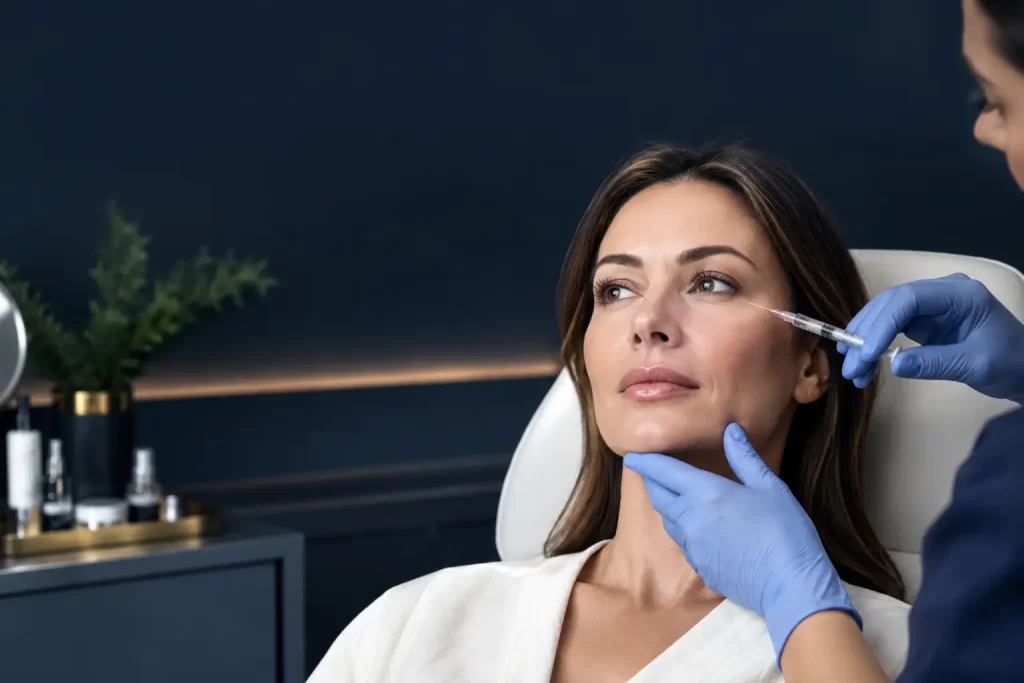
You may notice it first in photos: lines between the brows that make you look more serious than you feel, a forehead that seems more etched after a demanding season, or cheeks and lips that no longer have the same definition. When considering wrinkle relaxers versus fillers, the right answer is rarely about choosing the “better” treatment. It is about understanding what is causing the change you see and selecting an approach that supports your features rather than alters them.
Both treatments are injectable options, but they work in very different ways. A thoughtful aesthetic plan begins with your facial movement, skin quality, natural structure, medical history, and the result you want when you look in the mirror.
Wrinkle Relaxers Versus Fillers: The Core Difference
Wrinkle relaxers temporarily reduce the activity of selected facial muscles. They are commonly used for expression lines, including horizontal forehead lines, the vertical lines between the eyebrows, and crow’s feet around the eyes. These lines form because the skin repeatedly folds as you smile, squint, frown, or raise your brows.
By softening targeted muscle movement, wrinkle relaxers can make these dynamic lines appear smoother and help prevent them from becoming more deeply set over time. The goal is not to remove every trace of expression. When treatment is appropriately planned and dosed, you should still look like yourself – rested, approachable, and naturally expressive.
Dermal fillers work differently. They add or restore volume beneath the skin, often using a gel-like substance designed to integrate smoothly into targeted areas. Fillers may be considered when changes are related to volume loss, structural support, or contour rather than muscle movement. Common areas include the cheeks, lips, chin, jawline, and folds around the mouth.
In simple terms, wrinkle relaxers address repeated movement. Fillers address volume, shape, and support. Many people benefit from one treatment alone, while others may be candidates for both at different areas of the face.
When Wrinkle Relaxers May Be the Better Fit
If your concern appears mainly when your face moves, wrinkle relaxers may be the more logical starting point. For example, forehead lines that become prominent when you lift your brows or crow’s feet that deepen when you smile are typically movement-related.
Treatment may also be appealing if you want a refined change without adding volume. Some patients worry that injectables will make them look unlike themselves. That concern is understandable, especially when poorly planned cosmetic work is highly visible online. A conservative approach focuses on the specific muscles contributing to your concern, then evaluates your response before making additional adjustments.
Results typically develop gradually over several days, with the full effect becoming more apparent within about two weeks. The duration varies by product, dose, treatment area, metabolism, and individual response, but many patients schedule maintenance appointments several times a year.
Wrinkle relaxers are not the ideal solution for every line. A crease that remains visible even when your face is fully at rest may involve skin changes, volume loss, or both. In that situation, relaxing the muscle may help, but it may not address the entire concern on its own.
The balance between smooth and overtreated
The forehead and brow area deserves particularly careful planning. Too much relaxation in the wrong location can affect expression or brow position. Too little may not deliver the improvement you hoped to see. This is why facial anatomy, your normal expressions, and a clear understanding of your aesthetic priorities matter as much as the product itself.
For some people, preserving a little movement is exactly the right choice. Natural-looking treatment is not a one-size-fits-all look. It is a result that respects your face, lifestyle, and preferences.
When Fillers May Be the Better Fit
Fillers may be more appropriate when the concern is related to lost volume or facial balance. You might notice that your cheeks look flatter, the area beneath the eyes appears more hollow, the lips have lost definition, or the jawline seems less distinct than it once did. These changes can occur with age, weight fluctuations, genetics, sun exposure, and normal shifts in facial fat and bone structure.
Strategically placed filler can restore support or refine proportion without creating an exaggerated appearance. In experienced hands, cheek filler does not have to mean visibly larger cheeks, and lip filler does not have to mean an overfilled look. Small, carefully placed amounts can enhance shape, improve symmetry, or restore definition while keeping the focus on your overall face.
Some filler results are visible right away, although temporary swelling or bruising can affect the early appearance. The final look becomes clearer as the area settles. Longevity also varies widely by product, area treated, your metabolism, and how much product is used. Areas with frequent movement, such as the lips, may require more frequent maintenance than areas with less movement.
Filler should not be viewed as a universal answer to every crease. Adding volume to a line caused primarily by facial movement can create an unnatural result. Likewise, repeatedly adding filler without reassessing facial proportion can lead to a look that feels heavy rather than refreshed.
Structure first, line second
A polished filler plan often looks beyond the line that initially catches your attention. For instance, a fold near the mouth can sometimes be influenced by changes higher in the cheek. Supporting the midface may be a more balanced option than placing product directly into the fold. Whether that approach is appropriate depends on your anatomy and goals.
This is where a full-face assessment makes a meaningful difference. The best treatment plan is not necessarily the one that treats the most areas. It is the one that makes the most strategic improvements with restraint.
Can You Combine Wrinkle Relaxers and Fillers?
Yes. Combining treatments can be a sensible option when different concerns have different causes. Someone may use wrinkle relaxers to soften frown lines while using filler to restore cheek support or refine the chin and jawline. The treatments complement one another because one influences muscle activity and the other addresses volume and contour.
That does not mean combination treatment is automatically necessary. If you are new to injectables, starting with one area or one treatment type can be a comfortable, measured way to learn what feels right for you. A gradual plan also makes it easier to evaluate results and avoid doing more than you need.
Skin quality matters, too. Fine lines, texture changes, discoloration, and laxity may respond better to a broader approach that can include professional skin care, laser-based services, or other skin rejuvenation options. Injectables can be powerful tools, but they do not replace every type of aesthetic treatment.
What a Personalized Consultation Should Cover
A quality consultation should feel like a conversation, not a rushed transaction. Before recommending wrinkle relaxers, fillers, or a combination, your provider should evaluate your facial movement at rest and in expression, your skin and tissue quality, prior injectable history, medications, allergies, and relevant medical considerations.
You should also discuss what “natural” means to you. For one person, that may mean softening lines while keeping full expression. For another, it may mean restoring subtle cheek structure after weight loss. Clear goals help guide the treatment plan and the amount of product used.
It is also wise to discuss realistic expectations. Every injectable treatment carries potential risks, including swelling, bruising, tenderness, asymmetry, and uncommon but more serious complications. Fillers in particular require careful anatomical knowledge and prompt attention if unexpected symptoms occur. Choosing a physician-directed practice and following pre- and post-treatment guidance can support a safer, more comfortable experience.
At Divine Longevity and Wellness, Dr. Arshadi approaches aesthetic care with the same attention to personalization that guides the practice’s broader health and longevity services. Your features, goals, and comfort level should guide the plan – not a trend, a filter, or a standardized package.
Choosing the Treatment That Supports Your Goals
If a line appears with expression, wrinkle relaxers may be worth discussing. If your concern is volume, contour, or structural support, fillers may be the more appropriate option. If you see a combination of both, a staged plan can offer a balanced path forward.
The most rewarding aesthetic results rarely announce themselves. They simply help you look more rested, confident, and aligned with how you want to feel. A personalized consultation can clarify what your face is asking for and help you move forward with a plan that feels distinctly your own.