
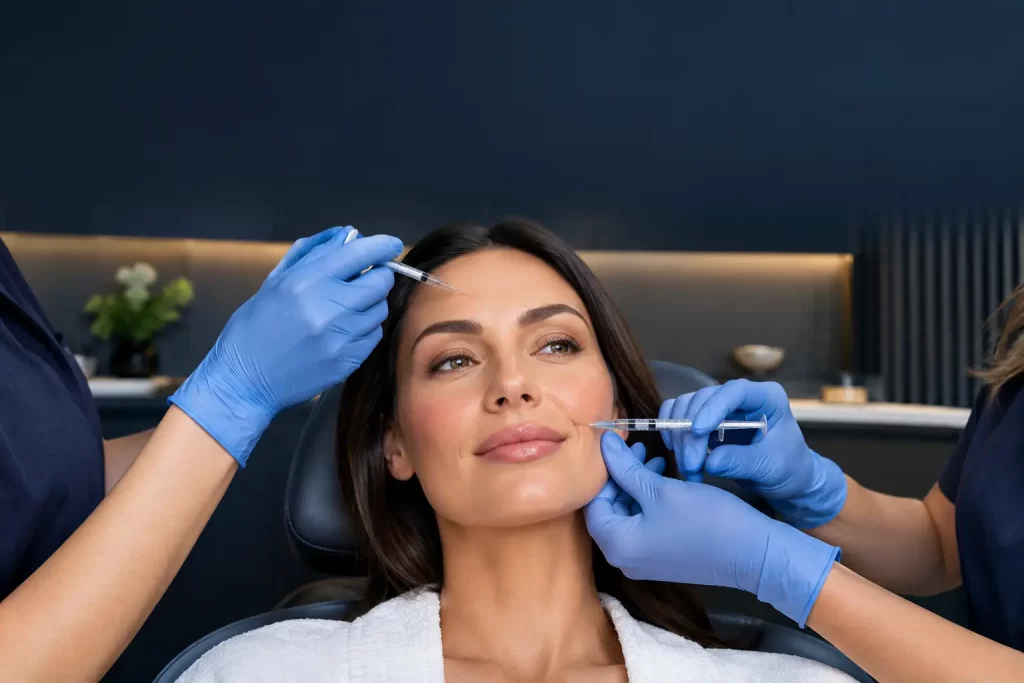
A furrow between your brows may make you look more stressed than you feel. A flatter cheek or softened lip border can change how rested and vibrant your face appears, even when your energy is high. That is why the Botox versus dermal fillers decision is not really about choosing the “best” injectable. It is about understanding what is creating the change you see and selecting a treatment that supports your features naturally.
Both options are non-surgical and commonly used in aesthetic medicine, but they work in very different ways. One relaxes targeted muscle movement. The other can restore or refine volume and structure. A thoughtful plan starts with your anatomy, facial movement, skin quality, medical history, and the degree of change you want – not with a one-size-fits-all menu.
Botox Versus Dermal Fillers: The Core Difference
Botox is a wrinkle relaxer. It uses a purified neuromodulator to temporarily reduce the activity of selected muscles. When certain facial muscles repeatedly contract, they can create expression lines such as the vertical lines between the brows, horizontal forehead lines, and lines at the outer corners of the eyes. Relaxing those muscles can soften the appearance of dynamic wrinkles while preserving appropriate, natural expression when treatment is carefully tailored.
Dermal fillers work differently. Most contemporary fillers are gel-like products made with hyaluronic acid, a substance that occurs naturally in the body. Fillers are placed beneath the skin to add volume, support facial contours, refine proportion, or soften certain folds and creases. Depending on the product and placement, they may be used in areas such as the cheeks, lips, chin, jawline, temples, under-eye region, or around the mouth.
A simple distinction helps: Botox treats muscle-driven movement, while dermal fillers address volume, contour, and structural support. Yet facial aging and facial appearance are rarely that simple. Many people have both dynamic lines and volume shifts, which is why the right recommendation may include one treatment, the other, or a carefully staged combination.
When Botox May Be the Better Fit
Botox is often a strong option when the concern is most visible during expression. If lines deepen when you squint, smile, raise your eyebrows, or concentrate, muscle movement may be a major contributor. Some people choose treatment because they want a smoother, more relaxed appearance; others want to maintain a polished look that better reflects how energetic and confident they feel.
Common treatment areas include the forehead, frown lines, and crow’s feet. Depending on individual anatomy and clinical assessment, a wrinkle relaxer may also be considered for concerns such as a gummy smile, chin dimpling, neck bands, or excessive jaw muscle activity. These uses require a precise understanding of facial balance and function.
Results from Botox generally develop over several days, with the full effect often becoming more apparent within about two weeks. Effects are temporary, and many patients return periodically to maintain their preferred look. The exact timeline varies based on the area treated, dose, muscle strength, metabolism, and individual response.
Botox is not designed to replace lost cheek volume, reshape a jawline, or fill a deep fold caused by tissue descent. Using a wrinkle relaxer for the wrong concern can lead to disappointment, even when the product itself is excellent.
When Dermal Fillers May Make More Sense
Dermal fillers may be more appropriate when your concern remains visible even when your face is at rest. Volume changes can make the cheeks appear less supported, the lips less defined, the jawline less crisp, or the lower face heavier than it once was. Filler can be used strategically to restore proportion rather than simply add fullness.
This distinction matters. Natural-looking filler is not about making every feature larger. In many cases, it is about placing the right amount of product at the right depth to create better balance. A small amount of support in the cheeks or chin, for example, may improve overall harmony more effectively than repeatedly treating a line near the mouth.
Results from hyaluronic acid fillers are typically visible soon after treatment, though temporary swelling and bruising can affect the early appearance. How long filler lasts depends on the product, placement, amount used, facial movement, and your individual metabolism. Some areas may hold correction longer than others.
Fillers are not a substitute for every skin concern. Fine, crepey texture, pigment changes, and significant skin laxity may call for a different approach, such as laser treatment, skin rejuvenation, or a customized plan that addresses skin quality alongside facial structure.
Why the Same Line Can Need Different Treatment
One of the most common sources of confusion is a line that seems as though it should be “filled” but is actually driven by movement. Conversely, a crease that looks like a wrinkle may be related to volume loss or shifting facial support. Treating only the surface can miss what is happening underneath.
Take the area around the mouth. Some lines are caused by repetitive muscle movement and may respond better to a wrinkle relaxer. Others are linked to changes in cheek support, lip structure, or skin quality. Filling directly into every line is not always the most refined choice and can sometimes look overdone. The same principle applies to the under-eye area, where anatomy, skin thickness, and existing puffiness must be evaluated carefully.
This is where physician-directed care makes a meaningful difference. A skilled assessment looks at your face in motion and at rest, from multiple angles, and in the context of your overall goals. Dr. Arshadi focuses on recommendations that make sense for your features, not on adding treatments you do not need.
Can You Combine Botox and Fillers?
Yes. Botox and dermal fillers are often complementary because they address different contributors to facial aging and facial balance. Botox can soften repeated muscle movement in the upper face, while filler can support the midface, enhance lip definition, or refine the chin and jawline. Used conservatively, the combination can create a rested, refreshed result without changing the character of your face.
The order and timing depend on the areas being treated. In some cases, it makes sense to begin with Botox, allow the muscles to settle, and then reassess whether a crease or imbalance still needs filler. In others, structural support with filler may be the priority. There is no universal sequence because every face has different needs.
A gradual approach is often valuable, especially if you are new to injectables. You can make measured refinements, see how you respond, and build a treatment plan over time rather than feeling pressured to do everything in one appointment.
Safety, Selection, and Natural-Looking Results
Injectables are medical treatments, not casual beauty purchases. Even commonly performed procedures require an informed discussion of your health history, allergies, medications, previous cosmetic treatments, and aesthetic priorities. Bruising, swelling, tenderness, and asymmetry can occur. More serious complications are uncommon but possible, particularly with dermal filler, which is why product choice, injection technique, facial anatomy knowledge, and appropriate follow-up matter.
You should also be candid about the result you want. “Natural” can mean different things to different people. For one person, it means a softer brow furrow with full facial movement. For another, it means restoring cheek shape without creating obvious volume. Clear communication helps guide treatment decisions and prevents an outcome that feels unlike you.
The best aesthetic plan also respects proportion. A youthful-looking face is not necessarily a frozen face or a heavily filled face. It has balance, movement, and features that work together. Thoughtful treatment should help you look well-rested and confident, not noticeably treated.
What to Discuss at Your Consultation
Come prepared to talk about what bothers you, but also what you like about your face. Share photos if there is a version of yourself or a specific aesthetic direction you want to reference. Your consultation should cover your goals, treatment history, timing around important events, potential downtime, and a realistic maintenance plan.
If you are deciding between Botox and fillers, ask what is causing the concern you see. Is it muscle movement, loss of support, skin texture, or a combination? Ask what a conservative first step would look like and how the plan can be adjusted as your results develop. A good recommendation should feel clear, individualized, and aligned with your comfort level.
At Divine Longevity and Wellness in Chesterfield, Dr. Arshadi can help you evaluate whether Botox, dermal fillers, or a more comprehensive aesthetic strategy best supports your goals. The most rewarding result is not chasing someone else’s face. It is choosing thoughtful care that helps you look like yourself – refreshed, balanced, and ready for what is next.