
You may first notice it in photos: more scalp visible at the part, a wider hairline, or less density around the temples and crown. The best treatments for hair thinning are rarely about one shampoo, supplement, or procedure. They begin with identifying why your hair is changing, then building a strategy that fits your health, timeline, and goals.
Hair thinning can affect confidence long before it becomes dramatic. It can also be frustratingly complex. Genetics may be part of the picture, but hormonal shifts, stress, nutrition, certain medications, illness, scalp inflammation, and changes in weight can all influence the hair-growth cycle. A thoughtful medical evaluation helps separate temporary shedding from progressive pattern thinning so you can spend your energy on options with a meaningful rationale.
Why the Cause of Hair Thinning Changes the Treatment
Hair normally cycles through growth, transition, and resting phases. When more follicles shift into the resting phase at once, you may see increased shedding several weeks or months after a significant stressor, fever, surgery, rapid weight change, restrictive dieting, or hormonal change. This pattern may improve as the trigger resolves, although recovery can take time.
Pattern hair loss is different. In men, it often appears as recession at the hairline or thinning at the crown. In women, it may show up as a widening part and overall loss of density at the top of the scalp. In these cases, genetically susceptible follicles gradually produce finer, shorter hairs. Early intervention can matter because treatments generally aim to support existing follicles rather than recreate follicles that have been inactive for years.
An evaluation should also consider scalp symptoms, recent health changes, family history, medications, menstrual or menopausal changes when relevant, diet, and possible nutrient concerns. Depending on your history, laboratory testing may help assess factors such as iron status, thyroid function, vitamin levels, metabolic health, and hormones. A lab value alone does not tell the whole story, but it can provide useful context for a personalized plan.
Best Treatments for Hair Thinning: Evidence-Based Options
Topical minoxidil
Topical minoxidil is one of the most established first-line options for pattern-related hair thinning in both men and women. Applied consistently to the scalp, it can help extend the growth phase of hair follicles and support thicker-looking hair over time. It requires patience. Many people need several months of regular use before they can fairly assess a response.
An early increase in shedding can occur as follicles transition through the cycle, which is understandably unsettling but does not always mean the treatment is failing. Scalp irritation, flaking, or unwanted facial hair growth can also occur, depending on the formulation and application technique. Stopping minoxidil may allow hair supported by treatment to gradually return to its prior pattern, so long-term consistency is part of the decision.
Prescription treatment when appropriate
Prescription options can be highly valuable for the right patient, particularly when androgen-related follicle miniaturization is contributing to thinning. Certain oral medications may reduce the effect of hormones that can shrink susceptible hair follicles, while low-dose oral minoxidil may be considered in selected cases under medical supervision.
These treatments are not right for everyone. Your medical history, cardiovascular health, current medications, pregnancy potential, hormone goals, and tolerance for possible side effects all matter. Women who are pregnant, trying to become pregnant, or breastfeeding need especially careful guidance around treatment choices. This is where a physician-directed plan is more useful than a one-size-fits-all protocol.
Platelet-rich plasma and regenerative approaches
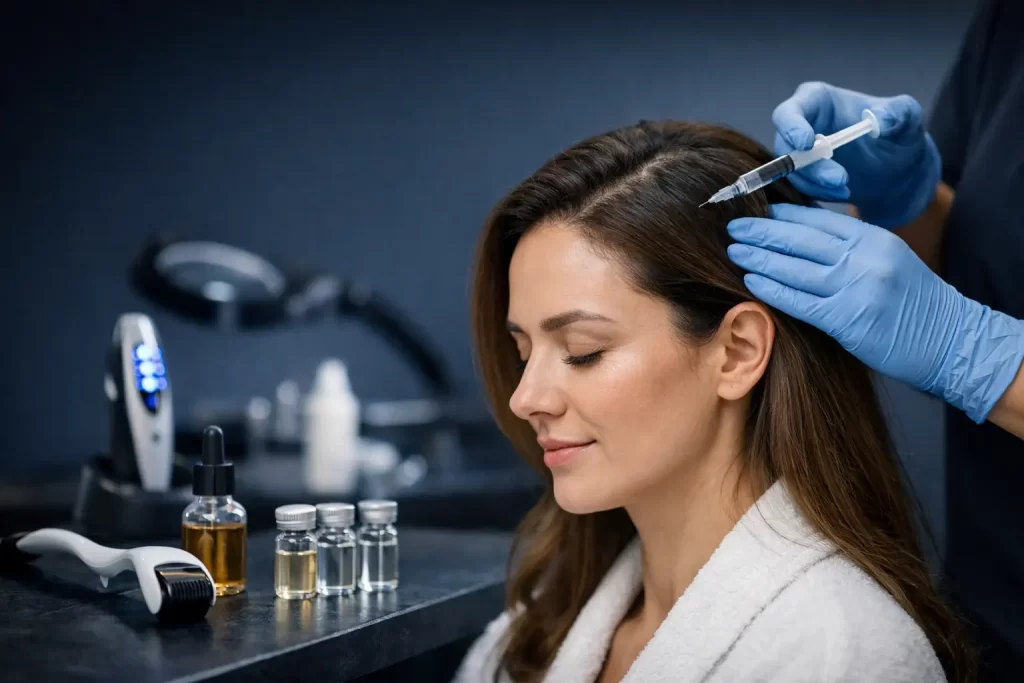
Platelet-rich plasma, often called PRP, uses a concentrated portion of your own blood that contains platelets and signaling proteins. It is injected into targeted areas of the scalp with the goal of supporting follicle activity. Research suggests PRP may improve hair density for some people with pattern hair loss, particularly when used as part of a broader treatment plan, but protocols and results vary.
PRP is not a substitute for a proper diagnosis or consistent home care. It may be a strong fit for someone who wants a non-surgical treatment that complements medical therapy, or for a patient whose early thinning calls for an added level of support. A consultation should cover expected treatment frequency, comfort measures, maintenance planning, and whether your degree of thinning is likely to respond.
Low-level laser therapy
Low-level laser therapy uses specific wavelengths of light intended to support follicle activity. FDA-cleared home devices, including laser caps and combs, are available for certain forms of hair loss. The commitment is practical rather than dramatic: treatments must be used consistently, often several times weekly, and results can be gradual.
For patients who prefer a non-drug option or want to layer a home-based modality into a broader plan, laser therapy can be worth discussing. It is not necessarily the best standalone answer for advanced thinning, but it can complement other medically appropriate options.
Correcting nutritional and lifestyle barriers
Hair is metabolically active tissue. Extremely low calorie intake, insufficient protein, low iron stores, restrictive eating patterns, and nutritional deficiencies can contribute to shedding in some people. Addressing a documented deficiency or improving inadequate protein intake can support healthier hair growth, but supplements are not a universal answer.
More is not always better. High-dose supplements can be unnecessary, interact with medications, or distort laboratory testing. Biotin is a familiar example: it may interfere with certain lab tests, and it is unlikely to solve pattern hair loss in someone without a deficiency. A targeted nutrition plan based on your diet, testing, and overall health is more sensible than taking a cabinet full of products.
Sleep, stress management, and sustainable weight-management strategies also deserve attention. They will not override genetics, but they can reduce avoidable pressure on the hair-growth cycle and support the consistency needed for any medical treatment plan.
What Usually Does Not Deliver Enough on Its Own
A gentle shampoo and conditioner can improve hair feel, reduce breakage, and make fine hair appear more polished. They are useful supporting tools, especially if you have color-treated, fragile, or irritated hair. However, cosmetic products typically do not address follicle miniaturization below the scalp.
Be cautious with products that promise to regrow a full head of hair quickly, claim to balance hormones without evaluation, or rely on vague proprietary blends. Before-and-after photographs can be affected by lighting, styling, hair fibers, and timing. The most credible approach is one that explains what a treatment can reasonably do, how long it may take, and how progress will be measured.
A Personalized Plan Is More Than a Treatment Menu
The right plan might be as focused as a topical treatment and follow-up photos, or it may combine prescription therapy, scalp-focused procedures, nutrition support, and hormone or metabolic evaluation. It depends on whether your primary concern is active shedding, gradual density loss, a receding hairline, scalp health, or a mix of several factors.
Progress should be assessed objectively whenever possible. Consistent photographs, the same lighting and part placement, shedding history, and scalp examination are more reliable than checking the mirror every day. Hair growth moves slowly, and treatment plans often need several months before the trend becomes clear. Ongoing follow-up also creates room to adjust when your response, goals, or health circumstances change.
At Divine Longevity and Wellness in Chesterfield, Dr. Arshadi approaches hair restoration as part of your larger health picture, not as an isolated cosmetic concern. That means looking closely at the factors that may be influencing your hair, discussing medically appropriate options clearly, and creating a plan designed around natural-looking improvement and long-term support.
If thinning hair has changed how you style your hair, show up in photos, or feel in your own skin, you do not have to settle for guesswork. A personalized consultation can help you understand the options that make sense for your scalp, health, and goals – and give you a clear place to start.